Digital Nomad Jobs for Beginners: How Remote Work Actually Starts
Digital nomad jobs for beginners are simply jobs you can do remotely, without being tied to a specific country or office. That’s it. They are not a genre of work, not a lifestyle product, and definitely not a shortcut to freedom. Most people who work remotely while traveling are doing fairly normal tasks: writing, answering support tickets, managing systems, editing content, coordinating projects, or maintaining websites. The difference is not the work itself, but where it is done. These remote jobs for digital nomads exist across many industries and are far more common than most beginners expect.
Beginners often get tripped up by the framing. They start by imagining travel first and income second, when in reality it works the other way around. Location independence is something you earn through reliability and competence, not something that magically appears once you declare yourself a digital nomad. If you approach this as “remote work that happens to allow mobility,” rather than “mobility with some work attached,” the whole thing becomes much more realistic and sustainable.
Who Digital Nomad Jobs Are Suitable For

Digital nomad jobs for beginners tend to suit people who are comfortable working on their own without constant supervision. You do not need to be entrepreneurial, charismatic, or particularly adventurous. What matters far more is your ability to manage yourself, communicate clearly, and take responsibility for outcomes. If you can sit down, focus, and deliver without someone watching over your shoulder, you already have a major advantage.
This path is especially suitable for people who prefer written communication over meetings and small talk. Many remote roles are async by nature, which rewards clarity and thoughtfulness rather than speed or loudness. On the flip side, if you rely heavily on external structure or need frequent feedback to stay motivated, remote work can feel isolating at first. That doesn’t make it impossible, but it does mean you need to build your own structure early on.
Core Skills Beginners Should Focus On First

Before worrying about job titles, tools, or niches, beginners benefit most from strengthening a few foundational skills. These are not glamorous, but they are the reason people get hired and kept.
Clear written communication is non-negotiable. Most remote work lives in email, chat, tickets, or documents, and misunderstandings are expensive when you’re not in the same room. Reliability is equally important; doing what you said you would do, when you said you would do it, builds trust faster than almost anything else. Finally, basic self-organization matters more than people expect. You don’t need complex systems, but you do need some way to track tasks, deadlines, and priorities without external reminders.
These skills transfer across every remote role. Technical skills can be learned later, but without these foundations, progress stalls quickly.
Beginner-Friendly Digital Nomad Job Categories
Some digital nomad jobs for beginners consistently offer realistic entry points for people just starting out. They are not “easy,” but they allow learning on the job and don’t require long credential chains.
- Writing and content roles: These include blogging, copywriting, editing, and content coordination. Most clients care more about clarity, structure, and meeting a brief than about formal education or literary talent.
- Virtual assistance and customer support: These roles revolve around organization, communication, and follow-through. They often provide stable income and exposure to how remote businesses actually operate.
- Entry-level technical work: QA testing, simple website updates, content uploads, and basic tool management can be learned quickly with hands-on practice. These roles often act as gateways into more advanced technical positions.
- Creative support roles: Social media management, basic design, and simple video editing reward consistency and improvement over time. Portfolios matter far more than certificates.
- Online teaching and tutoring: Language tutoring and structured teaching platforms tend to value clear communication and reliability over deep academic credentials.
What these roles have in common is that they reward doing the job well, not proving you’re exceptional upfront. For beginners, the best digital nomad jobs are usually the ones that prioritize consistency, clarity, and reliability over credentials.
Jobs and Offers Beginners Should Avoid
Remote work attracts its share of low-quality offers, especially aimed at beginners. Avoiding bad opportunities is just as important as finding good ones.
- Race-to-the-bottom marketplaces: Platforms that push prices extremely low often lock people into unsustainable workloads and make it hard to raise rates later.
- Passive income schemes: Anything that promises income without work usually makes money by selling the promise, not by delivering value.
- Unpaid or vague trials: Long unpaid tests or “prove yourself first” arrangements signal poor boundaries and often worse conditions later.
- Overpromising roles: Jobs advertising unusually high income for minimal effort rarely survive scrutiny.
If an offer feels vague, rushed, or oddly secretive, that’s usually not a coincidence.
Learning and Skill-Building Without Burnout
One of the fastest ways beginners burn out is by trying to learn everything at once. Courses, tools, niches, and platforms pile up until nothing moves forward.
A better approach is to pick one skill that clearly maps to paid work and focus on it exclusively for a while. Real projects, even small ones, teach faster than theory because they expose gaps immediately. Importantly, paid work should start as soon as possible, even if the pay is modest. Learning while earning keeps motivation high and prevents the feeling of endless preparation with no payoff.
Burnout usually comes not from effort, but from effort without direction.
Finding Real Remote Work as a Beginner
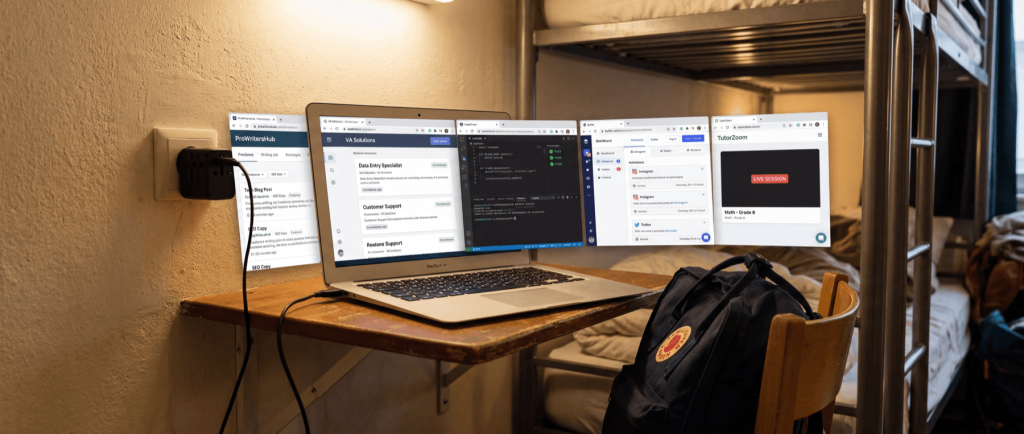
Finding remote jobs for digital nomads is less about discovering a secret platform and more about understanding how different channels behave. Beginners often fail not because there is no work, but because they apply to the wrong places in the wrong way. Each channel rewards a different strategy, and mixing them without understanding those differences leads to frustration.
Remote Job Boards
Remote job boards usually list structured roles with defined responsibilities, hours, and pay ranges. These are often better suited for beginners who want stability and predictable expectations. Competition can be high, but the hiring process is usually clearer than on freelance platforms. These roles often resemble traditional jobs, just without a physical office.
Freelance Platforms
Freelance platforms trade stability for flexibility. You pitch clients directly, negotiate terms, and manage your own workload. Early on, response rates can be low and rejection is normal. The upside is faster skill growth and direct exposure to client needs, which pays off later if you stick with it.
Company Career Pages
Many companies quietly hire junior remote workers through their own sites. These roles are easy to miss because they are not always advertised broadly. Checking career pages of companies you already like or use can uncover opportunities with far less competition. This approach rewards patience and consistency more than volume.
Networking and Visibility
Networking does not mean pitching strangers or posting motivational nonsense. Simply being present in relevant communities, asking sensible questions, and occasionally sharing what you are working on creates passive visibility. Over time, this leads to referrals or direct outreach. The key is to participate as a peer, not as a salesperson.
Positioning Yourself With Little or No Experience
Beginners often sabotage themselves by apologizing for their lack of experience. What matters more is how clearly you communicate value.
Transferable skills from non-remote jobs still count when framed around outcomes and responsibilities. A simple portfolio with real examples and short explanations is far more effective than a polished site full of vague claims. Applications should be direct, calm, and focused on solving a specific problem, not on proving worthiness.
Confidence here does not mean pretending to be senior. It means being clear, honest, and useful.
Income Expectations, Growth, and Stability

Money is where expectations tend to break people early. Not because the income is bad, but because beginners often expect the wrong shape of progress. Remote income usually grows unevenly and rewards patience more than intensity. In practice, the best digital nomad jobs tend to be the ones that grow steadily over time rather than promising fast or dramatic income jumps.
Early-Stage Income Reality
In the first few months, income is often inconsistent and lower than people hoped for. This phase is mostly about proving reliability and building trust, not maximizing rates. Many beginners temporarily trade pay for experience, clarity, and references. That trade only works if it has an end date.
How Income Actually Grows
Income growth in remote work is usually incremental rather than explosive. Rates rise as clients return, workloads stabilize, and communication becomes smoother. Most meaningful increases come from repeat clients or expanded scope, not from constantly finding new work. Momentum matters more than dramatic jumps.
Stability vs. Optimization
Chasing the highest possible rate early often leads to instability and stress. A lower but predictable income gives you room to improve skills and negotiate from a stronger position later. Stability also reduces burnout, which quietly kills more remote careers than low pay ever does. Optimization makes sense only after consistency exists.
When Things Usually “Click”
For many people, things start to feel easier only after several months of repetition. Work takes less mental energy, applications become faster, and client conversations feel more natural. This is usually the point where income becomes less stressful, even if it is not yet high. Quitting just before this phase is extremely common.
Lifestyle Realities and Common Beginner Mistakes
Working remotely while traveling adds complexity, not simplicity. Taxes, contracts, and residency rules vary widely, and ignoring them eventually causes problems. Time zones affect availability and expectations, so boundaries need to be explicit early on.
Common beginner mistakes include taking on too many roles at once, underpricing indefinitely out of fear, and constantly switching direction before momentum builds. None of these are fatal, but they slow progress significantly. Awareness alone prevents most long-term damage.
Remote work rewards patience more than intensity.
Conclusion
Most sustainable digital nomad jobs for beginners are built quietly. They start with unglamorous work, steady improvement, and a willingness to stick with one direction longer than feels exciting. Freedom comes as a side effect of competence and trust, not as a starting condition. The people who succeed are rarely the most adventurous at the beginning; they are the most consistent. Boring, done well, turns out to be very powerful.
Build Your Online Presence With Hoststage
At HostStage, we help remote professionals and beginners create a stable, professional online presence from the start. We provide reliable hosting designed for portfolios, service websites, and personal projects, backed by solid performance and responsive support. For beginners building their first serious site, the HostStage Business Shared Hosting plan offers a practical balance of resources, flexibility, and ease of use, allowing your site to grow without constant technical intervention. With HostStage handling the infrastructure, you can focus on building skills, attracting clients, and growing your remote career with confidence.